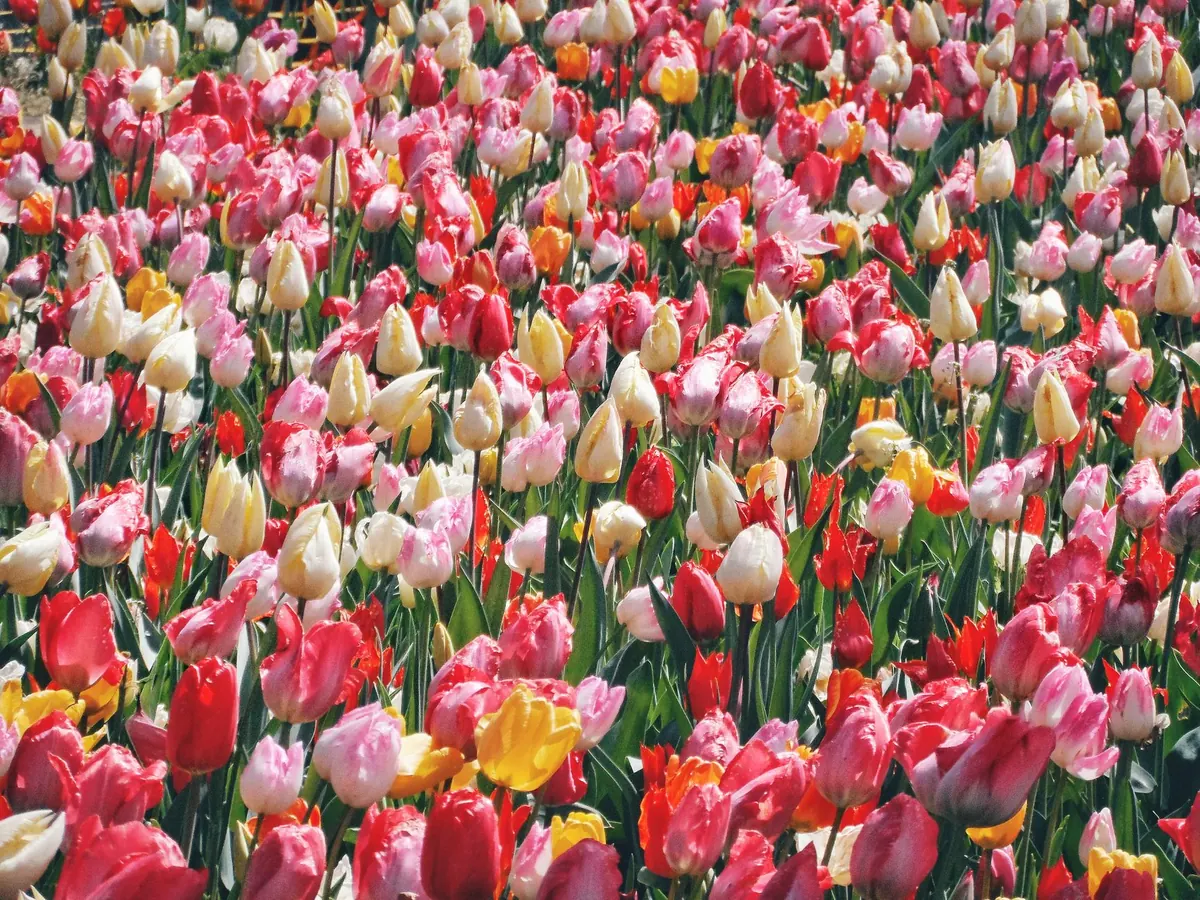
Bulbs are the most patient things in the garden. You press a dry, onion-shaped packet of promise into cold soil in October, and five months later it hands you back a flower. The only real way to get this wrong is to plant too late, too shallow, or all at once. So here is a schedule, month by month, that keeps something going in from the first cool week of September to the last reasonable day of December — plus the depths and the layering trick that stretch one bed of bulbs into three months of colour.
Nothing much is happening above ground, and that is exactly the point. Bulbs planted now have weeks of warm soil to make roots before the cold arrives. Root growth is what separates a strong April daffodil from a sulky one that comes up blind.
Start with the bulbs that need the longest run-in. Daffodils and narcissi go in first — all of them, from tiny Narcissus cyclamineus types to the big trumpet varieties. Then the architectural crowd: Allium hollandicum, Allium giganteum, camassia, foxtail lilies and Fritillaria imperialis. Add scilla and chionodoxa while you are at it; they naturalise happily in grass and under shrubs.
Snowdrops and winter aconites are the exception to every rule. They hate drying out, so buy them as soon as they appear and plant within a few days of delivery, 8–10 cm deep, in shade that stays damp. If you can find them sold "in the green" in early spring, that is easier still.
This is the month most of the work gets done. Hyacinths want to be in by mid-October so they have time to form roots before the frost; plant them 12–15 cm deep and 15 cm apart, and handle them as little as possible, since the bulbs resent the oils on your hands.
Crocuses go in now, in drifts rather than straight lines, 8–10 cm deep. So do Anemone blanda and muscari. Anemones look like dried raisins when they arrive — soak them in tepid water for a few hours before planting and they will plump up and grow away much faster.
Tulips are the one thing to hold back. If you garden where autumns are long and mild, mid-to-late October is fine. If winters arrive early and hard, wait until November. Nothing is gained by rushing them.
Late planting is not a compromise for tulips; it is the recommendation. Soil that has cooled reduces the risk of tulip fire, a fungal problem that shows up as twisted, spotted leaves in spring. It is also the reason you should buy fresh tulip bulbs each year rather than saving your own: the disease persists in the soil and on the bulbs.
Plant tulips 15–20 cm deep and about 12 cm apart, pointed end up, in full sun and drainage you would trust in January. In heavy clay, fork in a handful of grit per bulb and plant slightly proud of the surrounding soil so water runs away from the bulb rather than into it. Toss in anything else you forgot — late narcissi, more crocus, a handful of pushkinia — while the ground is still workable.
Once the ground freezes solid, stop. Forcing a spade into frozen soil does more damage than a late planting ever would. Keep unplanted bulbs in a paper bag — never polythene — in a cool, dark shed, check them for mould every couple of weeks, and plant them in the first mild spell that comes along. They will flower later, but they will flower.
December is also the month for pots and for anything headed indoors. Prepared hyacinths for forcing should already be in their pots and in the dark; tulips in containers can go in now, so long as the pots are frost-proof, have crocks over the drainage holes, and are placed somewhere the bulbs will not sit in standing water. A cold frame or against a sheltered wall is ideal.
The general rule is three times the height of the bulb, but the general rule gets vague fast. Here is the practical version, measured from the base of the bulb to the soil surface:
In containers, plant slightly deeper than you would in open ground, because pots freeze and thaw more sharply than borders do.
Layering bulbs in the same container is the simplest way to get eight or ten weeks of flowers out of a single pot. The logic is that big, late-flowering bulbs go deepest and small, early ones sit closest to the surface, each emerging as the previous layer fades.
The same idea works in a border. Dig one wide hole rather than several narrow ones, set the deep bulbs first, backfill partway, then set the shallow ones on top. Just keep a note of where the layers sit, because the trowel forgets.
Water the bed once after planting, then leave it alone. Squirrels and mice dig up tulips and crocus with enthusiasm; netting laid flat over the soil and pinned down, or a sheet of chicken wire just below the surface, solves it without a fight. Label everything, because in March you will swear you planted white crocus and not purple.
Above all, resist the urge to tidy in spring. Leave the foliage on for six weeks after flowering while it turns yellow and flops — that is the bulb refuelling for next year's show. Then cut it, feed the bed with a little bonemeal or general fertiliser, and get on with the rest of the garden. The autumn work is done; the reward arrives on its own.
Photo: Afitab / Pexels
A practical beginner’s guide to growing vegetables on windy, sun-baked balconies, with pot sizes, compost advice and...

A soil test report is only intimidating until you know which numbers change your decisions. Here's how to read pH,...
A practical guide to deadheading: where to pinch, how to angle the cut, and which flowers to leave alone so seed...

Cultivating beauty in every garden corner.
