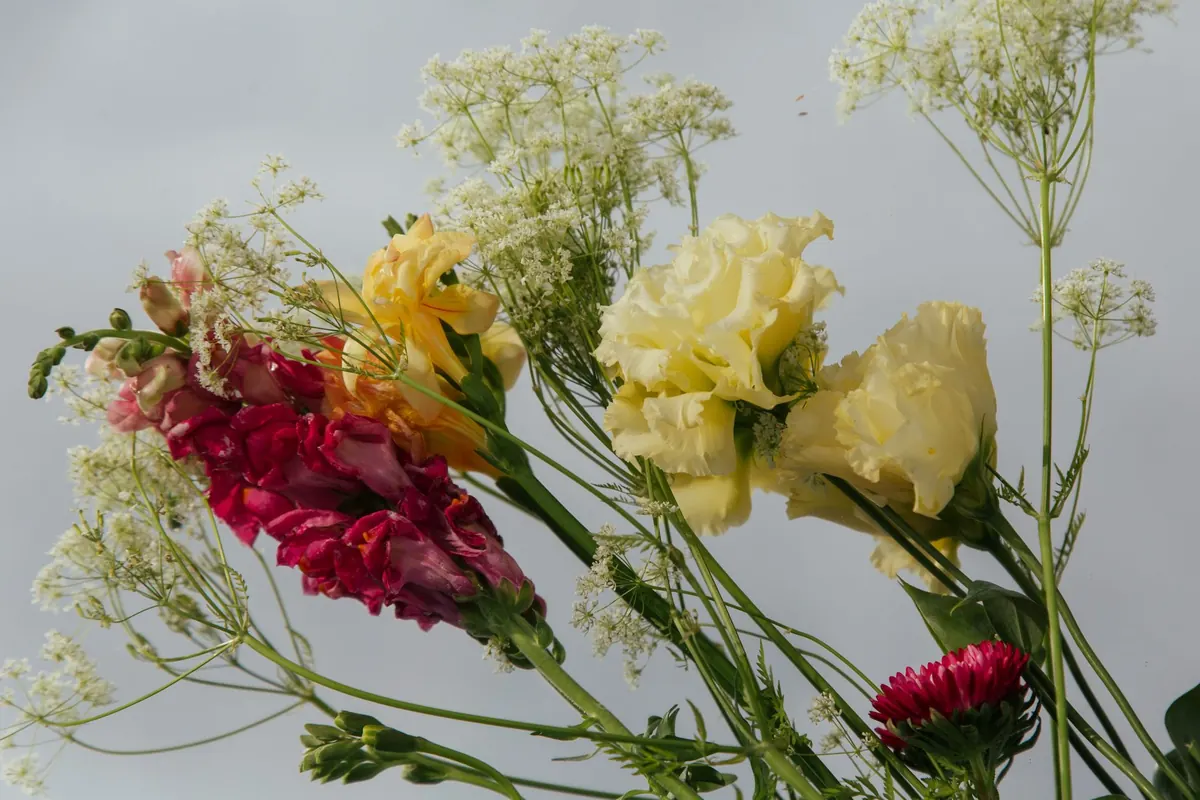
Cut flowers might be the most generous thing you can grow. A single packet of cosmos seed costs less than a coffee and can give you armfuls of bloom from July until the first hard frost. The catch is that a flower patch planted in one enthusiastic afternoon in May usually delivers one glorious fortnight and then nothing. Planning for a season rather than a moment is most of the skill. The rest comes down to spacing, timing, and knowing exactly when to pick.
Annuals are the backbone of a cutting garden. They flower fast, flower hard, and don't need to be coaxed through a second year. Some are so willing that they'll self-sow and save you the trouble next spring.
These are the ones I'd hand to a first-time grower without hesitation:
Leave a few things for your second or third year: lisianthus, delphiniums and dahlias are all lovely, but they ask for more patience, more heat, or a tuber order. Buy them as plants first, and grow the easy half from seed while you learn.
Almost all cutting annuals want the same three things: full sun for at least six hours, soil that drains rather than puddles, and enough room to breathe. A strip of lawn dug over and topped with a few centimetres of compost will outperform a fussy bed in shade.
Hardy annuals — cornflower, nigella, calendula, ammi, sweet peas — tolerate cool soil and can be sown direct in early spring, or in mild climates in autumn for earlier stems. Tender ones such as zinnias, tithonia and strawflowers want warmth. Either direct sow them a week or two after your last frost date, when the soil has properly warmed, or start them indoors four to six weeks earlier in individual modules.
Two details trip people up. First, zinnias dislike root disturbance: sow them in deep modules and handle the seedlings gently. Second, tiny seeds need light to germinate. Press them into the surface and water with a fine rose rather than burying them. Label everything, because a tray of seedlings all looks like a tray of seedlings until August.
The commonest disappointment isn't failure to germinate; it's a glut followed by a gap. Fix it by sowing small amounts often instead of one large amount once.
And don't bother staggering crops that flower until frost anyway. Zinnias, cosmos and ammi will keep going regardless; put that energy into cutting more often instead.
Crowded plants compete for light, and the result is spindly, weak growth with short stems — exactly what you don't want in a vase. Give each plant the room the packet suggests, and then give the big ones a little more. In practice: about 30cm between cosmos, 23–30cm between zinnias, 15–20cm between cornflowers and calendula, and 30–45cm for branching sunflowers. Ammi can sit closer, around 23cm, because it's meant to look like a cloud.
Airflow matters as much as light. Damp, still foliage in a tight block is an invitation to mildew, especially with zinnias in late summer. A gap you can walk down makes picking easier too.
When a young plant has three or four pairs of true leaves, pinch out the growing tip just above a leaf pair with your thumbnail. This pushes side shoots into growth, and side shoots mean more stems. Zinnias, cosmos, tithonia and branching sunflowers all respond well. Don't pinch single-stem sunflowers or anything you're growing for one early flush.
Pick in the cool of the morning once the dew has dried, or in the evening. Take a bucket of clean water with you and get stems into it within minutes rather than stacking them in the sun. Cut at an angle just above a leaf node, and strip the lower third of foliage so nothing sits under water and rots.
The stage of openness matters more than the time of day. Flowers picked too far open collapse in a day; picked too tight, they never open.
Condition the bucket in a cool, shaded place for a few hours before arranging. Change the water every day or two and re-trim the stems; that single habit does more for vase life than anything else. One caution: keep daffodils in their own vase, since their sap shortens the life of other flowers.
You don't need a dedicated plot. Three square metres in full sun will give a household more flowers than it can use, provided you cut them. Picking is not a reward at the end of the season; it's what keeps the plants flowering. Harvest hard, water deeply once a week rather than lightly every evening, and pull anything that turns mildewed or flowerless.
At the end of the season, write down what bloomed well, what came up short, and which colours you actually wanted on the table. That notebook is the real crop, and next spring's seed order will be twice as good for it.
Photo: cottonbro studio / Pexels
A practical beginner’s guide to growing vegetables on windy, sun-baked balconies, with pot sizes, compost advice and...

A soil test report is only intimidating until you know which numbers change your decisions. Here's how to read pH,...
A practical guide to deadheading: where to pinch, how to angle the cut, and which flowers to leave alone so seed...

Cultivating beauty in every garden corner.
