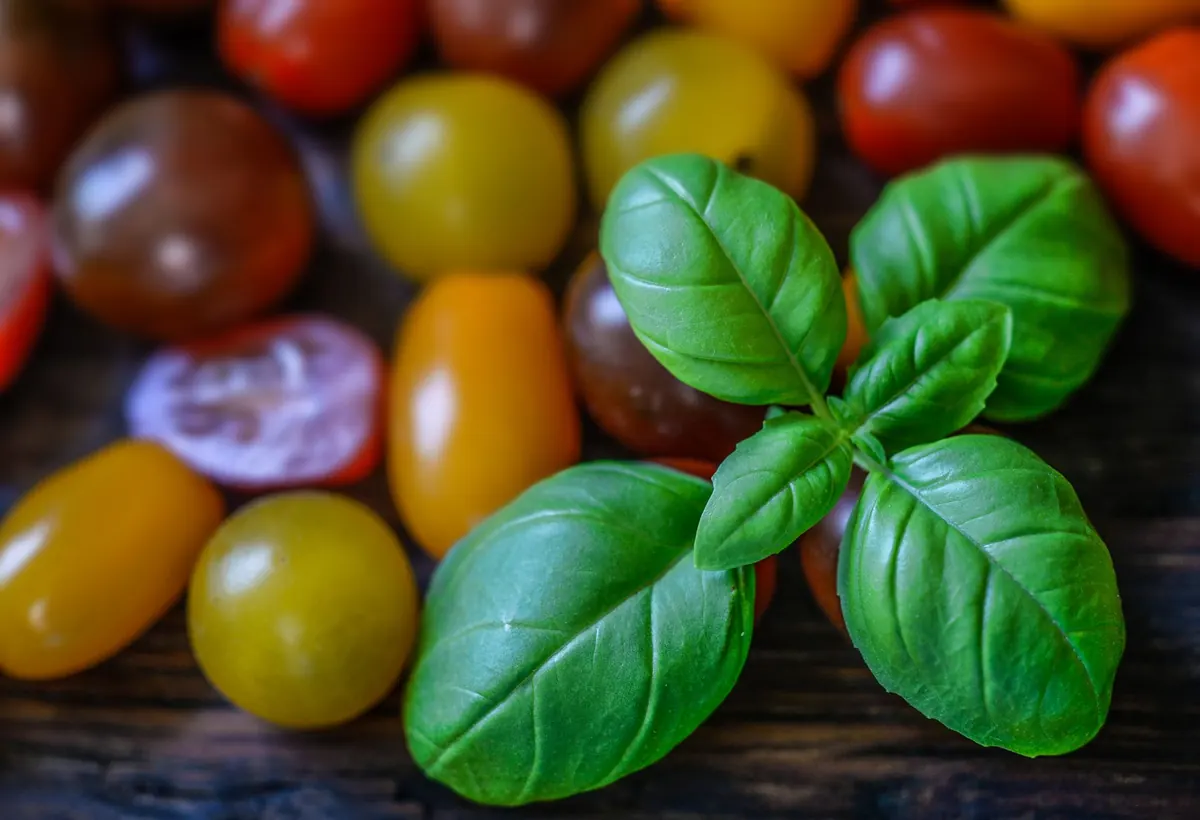
One morning the lower leaves of your tomato plant are green and glossy. A week later they are pale, limp, and frankly worrying. Yellowing — chlorosis, if you like the technical word — is not a disease in itself. It is a message, and a fairly talkative one. A leaf that has lost its green is telling you something about water, roots, nutrients, fungi, or insects, and the message changes depending on which leaves turn first, how the yellow spreads, and whether the veins stay green.
The trick is to read the whole plant before you reach for a spray or a bag of feed. Most gardeners do the opposite: they see yellow, assume hunger, and add fertiliser to a plant that is actually drowning. Below are the seven causes that fool people most often, with the visual clues that separate them.
Where the yellowing begins tells you more than the shade of yellow ever will. A quick diagnostic pass, done at eye level and then on your knees, narrows the list from seven suspects to two or three.
Check the soil before anything else. Push a finger in up to the second knuckle, or use a moisture meter. Nearly half of the yellowing we see in summer containers starts with a watering habit rather than a nutrient problem.
Tomato roots need air as much as water. When the soil stays saturated, roots suffocate, rot at the tips, and stop absorbing nutrients — which produces yellow leaves that look exactly like a deficiency. The giveaway is context: heavy clay, a container with a blocked drainage hole, a saucer left full, or a mulch piled against the stem.
Look for lower leaves turning yellow between the veins before going entirely pale, leaves that drop off easily when you brush them, soil that smells sour, and a plant that wilts in the afternoon and stays wilted at night. Lift a container plant out of its pot if you can: healthy roots are creamy white, dying roots are brown and soft.
Fix the drainage before you feed anything. Water less often but far more thoroughly, so the whole root zone is soaked and then allowed to dry slightly. Raise pots onto feet, empty the saucer, and keep mulch a hand's width from the stem.
Underwatering can also cause yellowing, but the texture gives it away. Leaves feel papery rather than soft, the margins turn yellow and then crisp brown, and leaflets curl upward like a canoe. The plant collapses in the hottest part of the day and recovers overnight — a pattern that repeats for a week or two before the damage becomes permanent.
Irregular watering is also behind blossom end rot, which is a calcium delivery problem rather than a soil shortage. A deep soak twice a week beats a light sprinkle every evening. Add a layer of mulch and water in the morning, when the plant can use the moisture before it evaporates.
This one has the clearest signature in the garden. Magnesium sits at the centre of the chlorophyll molecule, so when it runs short the plant moves what it has to the newest leaves, leaving the older ones mottled. You see yellow tissue between the veins while the veins themselves stay sharply green, usually on middle and lower leaves, often just as the plant is carrying a heavy truss of fruit.
It shows up most in sandy soils, in long-term containers, and after generous potassium feeding, since potassium and magnesium compete for the same uptake. A dilute Epsom salt spray on the leaves, following the rate on the packet, gives a quick top-up; dolomitic lime or a magnesium-rich feed works more slowly in the soil. Do not simply add more general fertiliser — the extra potassium can make it worse.
Nitrogen deficiency makes the whole leaf fade, veins included, starting at the bottom and moving upward. Growth is thin, stems are spindly, and the plant looks tired rather than sick. It is common in pots, in sandy soil, and after heavy rain has washed nutrients through the root zone.
But before you feed, rule out lockout. Cold soil in early spring, waterlogged roots, and a pH far from the slightly acidic range tomatoes prefer all stop the plant from taking up nitrogen that is sitting right there in the ground. If the soil is cold and wet, warming it and improving drainage does more than any fertiliser. If you have been feeding heavily and the plant is still pale, suspect the roots, not the pantry.
Fungal problems announce themselves with spots. Early blight produces brown lesions with concentric rings, like a target, usually ringed by a yellow halo, on the lowest leaves first. Septoria leaf spot gives smaller, rounder spots with pale grey centres and dark edges, and you can often see tiny black dots inside them. Late blight moves fastest: greasy grey-green patches that turn brown, with a white fuzzy growth on the underside in damp weather.
All three spread by water splashing from soil onto leaves. Water at the base, never overhead, and avoid handling plants when the foliage is wet. Remove affected lower leaves and put them in the bin rather than the compost. Mulch to stop soil splashing, stake plants for airflow, and rotate tomatoes to a different spot for a few seasons.
Wilt diseases are soil-borne and persistent, and their signature is asymmetry. Yellowing often starts on one side of a leaf or one side of the plant, sometimes as a V-shaped yellow wedge running in from the leaf edge. Leaves wilt during the heat of the day and recover at night in the early stages, then stay limp for good. Cut a stem near the base and you may see brown streaking inside.
There is no cure once a plant is infected. Remove and bin it, do not compost it, and avoid planting tomatoes in that spot for several years. Look for varieties listed as resistant to Fusarium and Verticillium — the resistance codes are usually printed on the seed packet.
Spider mites thrive in hot, dry weather and are easy to miss. Turn a suspect leaf over and look for fine stippling, faint webbing along the midrib, and a dusty grey-green cast that turns yellow-bronze as the population grows. Whitefly leaves sticky honeydew and black sooty mould; aphids cluster on new shoots and cause curling and yellowing of the youngest leaves.
Check the undersides of leaves twice a week during hot spells. A strong jet of water knocks mites back, insecticidal soap handles aphids and whitefly if applied thoroughly, and leaving a few flowering plants nearby helps bring in predators. Repeat treatment, because eggs hatch in waves.
An old yellow leaf will not turn green again, and that is fine. The question worth asking is whether the new growth looks healthy and whether the plant is setting fruit. Fix the cause, give it a week, and watch the next set of leaves — they will tell you whether you got the diagnosis right.
Photo: monicore / Pexels
A practical beginner’s guide to growing vegetables on windy, sun-baked balconies, with pot sizes, compost advice and...
A soil test report is only intimidating until you know which numbers change your decisions. Here's how to read pH,...
A practical guide to deadheading: where to pinch, how to angle the cut, and which flowers to leave alone so seed...

Cultivating beauty in every garden corner.
